

For decades, building around two high-performance desktop systems a quarter has provided me with a direct, hands-on appreciation for the evolution of compute architectures. Over the years, a sustained preference for AMD Threadripper processors has consistently demonstrated what a focused, aggressive engineering team can accomplish when they prioritize massive, scalable throughput. That same engineering DNA that reshaped the high-end desktop market is now actively reshaping the enterprise data center, and the timing could not be more critical for the artificial intelligence industry.
We are currently navigating a turbulent inflection point in the AI hardware market. While the initial generative AI boom was defined by a frantic, almost panic-driven rush to acquire hardware at any cost, the market is now entering a mature phase of deployment and rationalization. Chief Information Officers and enterprise developers are looking at their balance sheets, evaluating their power envelopes, and asking hard questions about long-term sustainability. In this environment, the undisputed market leader is suddenly showing significant vulnerabilities, creating a massive opportunity for a well-positioned challenger.
NVIDIA Encounters the Limits of Price and Power
NVIDIA deserves immense credit for kickstarting the generative AI revolution. Their foresight in developing the CUDA software ecosystem and their early bets on parallel processing architectures made them the default choice for AI training and inference. However, being the default choice in a monopoly-like environment inevitably leads to friction with the customer base.
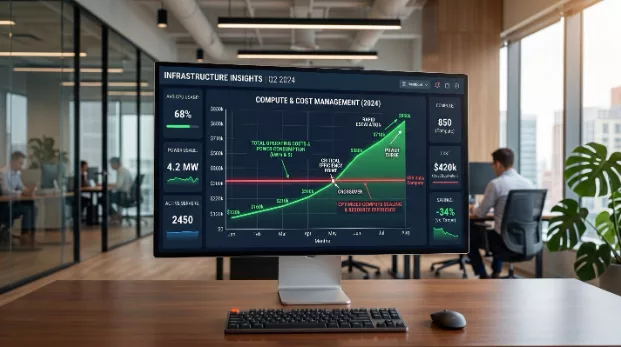
Today, NVIDIA is increasingly falling out of favor with a growing segment of AI developers and enterprise companies. The primary drivers of this frustration are exorbitant pricing models and staggering power requirements. Procuring NVIDIA’s flagship H100 or the upcoming Blackwell B200 GPUs requires massive capital expenditures. For many startups and mid-tier enterprises, the cost of entry is becoming prohibitive, threatening to stifle the very innovation that the AI boom promised to democratize.
Furthermore, the power draw of these systems is testing the physical limits of modern data centers. You cannot simply plug infinite racks of green hardware into a facility; you are bound by the electrical grid and the thermal dissipation capabilities of the building. Companies are discovering that the total cost of ownership extends far beyond the sticker price of the chips; it includes the massive utility bills and retrofitting required to keep these systems from melting down. Developers are actively seeking out architectures that prioritize efficiency alongside raw performance. They need hardware that delivers the compute necessary for advanced models without requiring a dedicated nuclear reactor to run it.
AMD’s Breakthrough in MLPerf Training 6.0
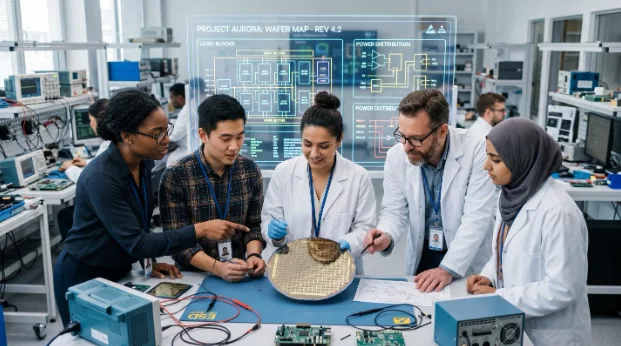
Taking advantage of a competitor’s market friction requires more than just showing up; it requires undeniable technical execution. This brings us to the latest benchmarks published by MLCommons, the industry standard for evaluating machine learning performance. AMD has delivered an absolute masterclass in execution with their recent MLPerf Training 6.0 results, proving that their Instinct MI300X accelerators are not just viable alternatives, but top-tier competitive solutions.
The MLPerf results provide validated, third-party proof that AMD’s hardware can stand toe-to-toe with NVIDIA in highly complex training workloads, particularly in large language models (LLMs). Training AI models is the most computationally intensive phase of AI development. It is where hardware bottlenecks are mercilessly exposed. By posting breakthrough numbers in MLPerf 6.0, AMD has definitively answered the question of whether they have the silicon capable of handling the heavy lifting of enterprise AI.
This achievement is not a lucky break; it is the result of sustained, grueling work. AMD’s engineering team and executive leadership deserve tremendous credit for staying incredibly focused on their strategic roadmap. Under the guidance of CEO Lisa Su and the broader technical leadership, AMD has refused to be distracted by industry noise. They have methodically built chiplet-based architectures, expanded their memory bandwidth, and optimized their interconnects to deliver the exact performance profiles that today’s AI workloads demand. They have earned their technical stripes, and the MLPerf results are the irrefutable receipt.
The Marketing Gap and the Strategic Hire of Carolyn Guss
However, having the best or most efficient hardware is only half the battle in the enterprise technology sector. The graveyard of Silicon Valley is filled with superior technologies that failed because they could not tell their story or build market perception. Historically, this has been AMD’s Achilles heel against NVIDIA and Intel. AMD has often won the technical benchmarks but lost the marketing war, allowing competitors to dominate mindshare and maintain premium pricing.
To capitalize on NVIDIA’s current vulnerabilities, AMD must aggressively translate its technical achievements into corporate recognition. This makes the timely appointment of Carolyn Guss as Chief Communications Officer a critical strategic maneuver. While often viewed through the lens of a CMO-equivalent in terms of shaping global narrative, Guss is stepping in to oversee corporate, product, and executive communications at the exact moment AMD needs to scale its AI leadership story.
Guss brings over two decades of heavy-hitting experience that maps perfectly to AMD’s current challenges. Coming from Salesforce—a company that masterfully transitioned from a simple CRM tool into a global standard for enterprise cloud computing—she understands how to position complex enterprise solutions to C-suite decision-makers. Her previous roles at PagerDuty and Orange provide a deep track record in product launches and reputation management.
AMD does not need to convince hardware engineers that their silicon is good; the MLPerf results do that. AMD needs to convince CIOs, CFOs, and enterprise boards that AMD is the safe, strategic, and financially responsible choice for their AI infrastructure. Guss’s expertise in executive counsel and corporate storytelling is exactly what is required to reframe AMD not as an “alternative” to NVIDIA, but as the smarter, more efficient foundation for the next decade of AI. She has the background to craft campaigns that highlight NVIDIA’s high total cost of ownership while showcasing AMD’s efficiency, open-source alignment, and engineering stability.

What Else AMD Needs to Do to Seize the Market
While the hardware is competitive and the communications leadership is now in place, the war is far from over. To truly effectively take advantage of current market trends, AMD must execute flawlessly on several remaining fronts.
First and foremost is the software ecosystem. NVIDIA’s deepest moat is CUDA. To break this monopoly, AMD must continue to heavily fund and rapidly iterate on their ROCm open software platform. They need to make the transition from CUDA to ROCm entirely frictionless for developers. This means aggressive investments in developer relations, comprehensive documentation, and direct engineering support for major open-source AI frameworks like PyTorch and TensorFlow. If a developer has to spend weeks rewriting code to port their model to an MI300X, the cost savings of the hardware are negated by the cost of labor. AMD must ensure that their software stack “just works.”
Secondly, AMD needs to align its hardware and software optimizations with the emerging trends in AI architecture, specifically the shift toward agentic AI. It is vital to distinguish between agentic AI, which operates at the cognitive layer to reason, plan, and make decisions, and standard automation, which merely handles the execution layer of predefined tasks. The hardware requirements for these two layers are different. Agentic AI requires massive, continuous context windows and rapid memory access to maintain situational awareness and reasoning loops. AMD’s strategy of providing massive memory capacity on their accelerators positions them perfectly for agentic workloads. They need to aggressively market this specific capability, showing how AMD hardware is uniquely suited to power the advanced cognitive models of the future, rather than just the simple automation tasks of the past.
Finally, AMD must secure deeper, more exclusive partnerships with hyperscale cloud providers and enterprise system integrators. Availability is a feature. If an enterprise wants to transition to AMD but cannot secure the necessary cloud instances from AWS, Azure, or Google Cloud, they will default back to NVIDIA. AMD must ensure that their MLPerf-winning hardware is ubiquitous and easily accessible across all major cloud platforms.
Wrapping Up
The competitive dynamics of the AI hardware market are shifting rapidly. NVIDIA, while still the dominant force, is testing the patience of its customer base with astronomical prices and unsustainable power demands. AI developers and enterprise buyers are actively searching for a viable, efficient alternative.
With their breakthrough MLPerf Training 6.0 results, AMD’s engineering and leadership teams have proven they have the silicon to compete at the absolute highest levels of machine learning workloads. They have stayed focused, executed their roadmap, and delivered a product that solves real-world pain points. By bringing in Carolyn Guss to overhaul their global communications and narrative strategy, AMD is finally equipping itself to win the mindshare battle that has long eluded them.
If AMD can pair this hardware excellence and improved storytelling with a relentless focus on improving their software ecosystem and optimizing for next-generation agentic AI, they are positioned to not just compete with NVIDIA, but to fundamentally disrupt their dominance in the data center. The hardware is ready; now it is time for AMD to capture the market they have rightfully earned.