

I have spent decades analyzing the architectural shifts that define personal computing, watching the industry pivot from mainframes to client-server, and then from local desktops to the cloud. We are currently navigating another massive transition that will fundamentally redefine how we interact with machines. As the industry races to integrate artificial intelligence directly into the operating system and local hardware, the attack surface for enterprise organizations is expanding at an alarming rate. The gap between raw generative processing capability and enforced software security is where the real danger lies, and it is a gap that traditional security vendors are struggling to bridge.
Today, the modern workstation – increasingly a powerful, portable notebook that effectively serves as a mobile desktop replacement – holds the keys to an enterprise’s most sensitive, confidential information. Yet, most organizations are still applying legacy, reactive security paradigms to an entirely new class of computational behavior. As artificial intelligence moves from the cloud to the endpoint, the rules of the game have completely changed.
The Unique Vulnerability of Agentic AI Workflows
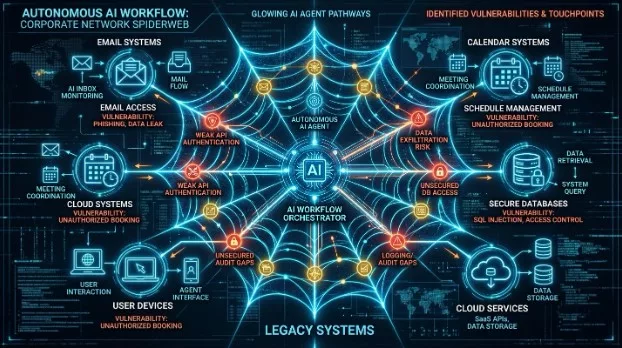
The conversation around artificial intelligence has rapidly shifted from simple, passive generative text chatbots to what the industry now calls agentic AI. Unlike passive tools that sit idle until you type a prompt, agentic AI workflows operate autonomously in the background. They can parse your calendar, read your incoming emails, draft contextual responses, scrape web data, and execute commands across multiple local and cloud applications to achieve a stated goal.
A prime example of this reality is OpenClaw, a free and open-source autonomous artificial intelligence agent that can execute complex tasks via large language models (LLMs), using messaging platforms as its main user interface. While OpenClaw represents an incredible leap in personal productivity, allowing users to build a “second brain” that acts on their behalf 24/7 by routing tasks through a local background daemon, it also represents an unprecedented security vulnerability for IT administrators. These agents require vast, unrestrained access to system resources, local data, and user credentials to function effectively.
If an agentic AI framework like OpenClaw is subjected to a prompt injection attack, or if it falls under malicious influences through poisoned data sets, the consequences for the enterprise are disastrous. A compromised agent doesn’t just crash or throw an error code; it actively works against the user, potentially exfiltrating highly sensitive corporate data, overriding network permissions, and creating a massive privacy protection failure. Because these agents are designed to operate seamlessly in the background and mimic legitimate user actions, traditional signature-based antivirus software often completely misses the unauthorized activity. The legacy security software assumes the agent is simply executing its normal, authorized routine.
This lack of visibility into AI presence and behavior is the critical failure point for most modern endpoint defenses. You cannot secure what you cannot see, and you cannot stop an attack if your security software cannot distinguish between a legitimate agentic workflow and a malicious, data-stealing exploit.

HP’s Sandbox and Container Mastery
This is where HP has a distinct, structural advantage over nearly every other PC original equipment manufacturer (OEM) on the market. HP has long maintained a best-in-class enforced security offering for endpoints, largely because their engineering teams recognized early on that relying purely on reactive software detection was a losing battle against sophisticated adversaries. Instead, HP has leaned heavily into proactive isolation technology.
Their advanced HP Wolf Security architecture is built on a very strong, mature sandbox and container background. Through their Sure Click technology, HP has perfected the art of hardware-enforced micro-virtual machines (micro-VMs). Traditionally, when a user opens an untrusted file, clicks a sketchy link, or downloads a potentially dangerous email attachment, HP automatically isolates that specific activity within a disposable micro-VM powered by Intel and AMD virtualization extensions. If malware is present, it executes, but it is entirely contained within that sealed digital environment. When the task is closed, the micro-VM is destroyed, and the malware simply vanishes without ever touching the host operating system.
Applying mature, existing virtualization foundations to the novel AI security problem is rapidly becoming a strategic imperative across the industry. Leading cybersecurity architectures are now leveraging hardware-enforced isolation technology to create essential guardrails for agentic AI workflows. What the modern enterprise security stack must deliver is comprehensive AI governance. First, these next-generation systems provide vital visibility by discovering when and where an autonomous AI is operating on the local machine. Second, they utilize secure AI containment, automatically placing robust agentic frameworks inside isolated micro-VM solutions rather than relying on legacy software detection.
By running the AI agent inside a tightly controlled micro-VM container, enterprise security providers ensure that even if the AI is compromised by a malicious payload or an unauthorized external command, the agent remains completely contained. The malicious influence cannot cross the virtualized boundary into the host operating system, nor can it access confidential data outside of its strictly defined policy controls. Furthermore, the industry is increasingly engineering these architectures with simple, standardized deployment methodologies, meaning IT administrators can seamlessly roll out these complex AI policy controls without requiring bespoke, customized configurations for every individual device in the corporate fleet.
While threat intelligence experts honestly note that the broader industry does not yet have extensive examples of containing hyper-advanced AI malware “in the wild”—largely because these specific agentic threat vectors are still actively emerging—security researchers have conclusively demonstrated in the lab that this containerized technology is entirely viable. The micro-VM approach works just as effectively against an errant, malfunctioning AI agent as it does against a traditional ransomware executable. Ultimately, this hardware-backed isolation enables the prompt execution of local analytics and agentic AI tasks without sacrificing absolute privacy protection against confidential data leakage.
Anchoring Trust With A Silicon-to-Cloud Approach
However, software containers, no matter how intelligently designed, are only as strong as the physical hardware they run on. A truly secure endpoint requires a silicon-agnostic but deeply integrated hardware root of trust. HP’s unique silicon-to-cloud solution allows them to stand out in a profoundly competitive and increasingly commoditized hardware field.
You cannot just secure the operating system; you must secure the firmware and the physical communication pathways on the motherboard itself. HP has historically led this charge with their self-healing BIOS technology, Sure Start, but their recent introduction of HP TPM Guard perfectly exemplifies their unmatched hardware differentiation against physical access attacks.
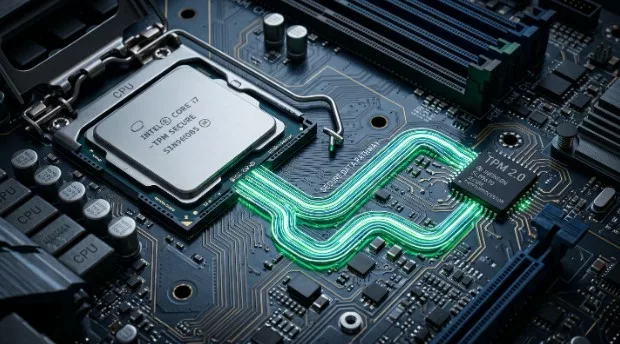
The Trusted Platform Module (TPM) is the cryptographic vault of the modern PC, heavily utilized by enterprise encryption tools like Microsoft BitLocker to protect data at rest. However, sophisticated attackers with physical access to a machine can use probing tools to intercept the encryption keys as they travel across the unencrypted bus between the TPM and the CPU. HP TPM Guard solves this critical vulnerability by physically and cryptographically encrypting this specific link, utilizing an authenticated tunnel that stops physical bus-intercept and sniffing attacks dead in their tracks. It physically binds the TPM securely to the device, rendering the chip completely inoperable if it is removed or tampered with by a bad actor.
This level of paranoia and precision at the hardware level fundamentally reinforces the micro-VMs operating at the software level. It creates a cohesive, highly enforced security ecosystem where the physical hardware, the firmware, the operating system, and the cutting-edge AI applications are all continuously monitored, verified, and protected from the factory floor to the employee’s desk.
Turning Security Dominance Into Sales Volume
When you evaluate corporate history and the mechanics of massive industry turnarounds—much like observing the strategic shifts at IBM in the 1990s or Apple in the early 2000s—you realize that having the superior product is only half the battle. The other half is ensuring that the broader market fundamentally understands the existential necessity of your technological solution.
Currently, HP’s security stack is a significant, highly respected part of every sales engagement. IT buyers and enterprise customers who use this technology frequently respond that HP is the only company that seems to fully grasp and actively mitigate these rapidly growing security risks. The problem, from a purely commercial standpoint, is that this realization often happens after the customer has engaged deeply with HP’s technical engineering teams, rather than being the primary, urgent driver that brings the customer to the purchasing table in the first place.
To drastically leverage these clear endpoint security advantages and significantly increase enterprise sales volume, HP needs to pivot its broader market messaging.
First, HP must stop selling “security features” and start selling “AI Insurance.” The enterprise market is universally terrified of AI data leakage, intellectual property theft, and rogue agentic workflows. HP needs to aggressively position their micro-VM containment not just as a neat, value-added security feature, but as the only responsible way to deploy artificial intelligence in a corporate environment. If a Chief Information Officer is going to allow highly autonomous tools like OpenClaw on their network, HP needs to make it abundantly clear that an HP endpoint is the only hardware platform where that deployment can be executed safely and legally. The core marketing message should be stark and uncompromising: deploying autonomous, agentic AI without HP’s hardware-enforced containment is nothing short of corporate negligence.
Second, HP needs to lean even harder into their partner ecosystem. HP uniquely educates and enables their global partners to successfully help deploy secure solutions, but this enablement needs to be weaponized specifically for the impending AI era. Channel partners shouldn’t just be quoting prices for fleet laptop refreshes; they should be actively conducting “AI Readiness and Risk Assessments” powered by HP Wolf Security frameworks. By empowering their channel partners to tangibly demonstrate the terrifying ease of prompt injection and data exfiltration in uncontained environments, the hardware sale naturally becomes a secondary consequence of a primary, unignorable security imperative.
Finally, HP should elevate the visibility of foundational technologies like TPM Guard to the C-suite and the boardroom. Board members intimately understand physical theft, regulatory compliance, and corporate espionage. By clearly explaining that a standard competitor’s laptop can be cracked with a physical probing tool to extract BitLocker keys, while an HP machine physically encrypts the internal pathways to protect the data, HP moves the conversation away from the IT department’s budget constraints and directly into the Board’s risk management portfolio. When security mitigates board-level risk, premium hardware pricing becomes irrelevant, and volume sales naturally follow.
Wrapping Up
The rapid influx of agentic AI is transforming the traditional personal computer from a simple, passive tool into an active, autonomous digital employee. But with this incredible autonomy comes an unprecedented risk to data privacy, intellectual property, and overall system integrity. Traditional software-based security is fundamentally ill-equipped to manage or police autonomous agents that are deliberately designed to mimic human behavior and access deep systemic resources.
HP’s foresight in developing deep, hardware-enforced isolation technology has positioned them perfectly for this exact inflection point in computing history. By intelligently utilizing mature micro-VM containers to physically wall off agentic AI workflows, and aggressively backing that up with impenetrable, silicon-to-cloud hardware defenses like TPM Guard, HP has built the safest, most resilient endpoint on the market. If HP can successfully translate this sheer engineering triumph into an aggressive, channel-driven narrative centered squarely about AI risk management, they won’t just secure their corporate users’ data—they will secure a dominant, unassailable share of the enterprise hardware market for the next decade.