


Lenovo’s near real-time AI infrastructure and advanced edge computing are transforming the 2026 FIFA World Cup, delivering ultra-low-latency broadcasts, unparalleled fan experiences, and democratized sports analytics on a global scale.
When the 2026 FIFA World Cup™ kicks off, it will be an event of unprecedented magnitude. Spanning three host countries, featuring an expanded roster of 48 teams, and anticipated to draw the eyes of an estimated 6 billion fans globally, the sheer scale of this tournament defies traditional broadcast and operational models. To meet this monumental logistical challenge, FIFA has partnered with Lenovo, relying heavily on the tech giant’s enterprise-level capabilities to orchestrate the most complex sporting event in human history.
Business Wire
This partnership is not simply a high-profile sponsorship; it is a foundational integration of advanced edge computing, artificial intelligence, and robust enterprise infrastructure. By effectively migrating critical processing workloads from distant cloud servers to on-premise edge locations, Lenovo is demonstrating why modern live sports require a dynamic, hybrid approach. From deploying cutting-edge data center hardware to utilizing advanced AI models for real-time analytics, Lenovo is proving that its technological competence extends far beyond standard consumer devices, solidifying its position as a dominant force in enterprise IT and global mission-critical event operations.

Powering an Unprecedented Global Broadcast at the Edge
Live sports broadcasting has always battled the inescapable laws of physics: latency. When billions of people are tuning in concurrently, even a few seconds of delay between the action on the pitch and the viewer’s screen can ruin the experience—especially in an era dominated by instantaneous social media updates. Traditional cloud-only broadcast solutions, while highly scalable, frequently fall short of the strict ultra-low-latency requirements demanded by high-stakes live production due to the inherent delays of transmitting heavy video packets to centralized data centers and back.
Lenovo has directly addressed this bottleneck through a massive deployment of near real-time AI-powered infrastructure at the edge. The core of this colossal operation is housed at the International Broadcast Center (IBC) in Dallas, Texas. Here, Lenovo has installed a formidable array of enterprise hardware, anchored by the Lenovo ThinkSystem SR635 V3 Rack Servers. Engineered specifically for high-density, mission-critical environments, these servers are tasked with ingesting, processing, and distributing massive volumes of live, uncompressed video data streaming in from stadiums across North America.
The results of this on-premise edge compute strategy are profound and measurable. Lenovo has managed to reduce Internet Protocol Television (IPTV) delays to under five seconds. This means that across ten dedicated live channels beaming to over 1,000 screens throughout FIFA venues, fans, media personnel, and VIPs are experiencing the action with practically zero noticeable lag. This execution is a masterclass in enterprise IT. To guarantee that this massive network remains flawless throughout the tournament, Lenovo has strategically deployed more than 17,000 Lenovo and Motorola devices and stationed over 200 highly trained engineers across all host venues and Team Base Camp training sites.
The AI Nerve Center: Mission-Critical Operational Control
Managing a tournament of this unprecedented geographical footprint requires a centralized “brain” capable of seeing, analyzing, and reacting to telemetry data from thousands of endpoints in an instant. This is where the Technology Command Center in Miami and the Tournament Operation Center come into play. Functioning as the definitive “mission control” for the duration of the World Cup, these hubs represent the absolute pinnacle of Lenovo’s Hybrid AI Solutions.
At these nerve centers, experienced engineers and senior FIFA management monitor the entire technological footprint of the games in near real-time. Lenovo’s AI infrastructure is designed to run flawlessly under the world’s most demanding conditions, constantly parsing data from stadium networks, security systems, and global broadcast feeds. This localized intelligence allows for rapid incident detection and immediate issue resolution, ensuring that minor technical anomalies are addressed before they can cascade into global broadcast failures.
“The FIFA World Cup is one of the largest and most complex sporting events in the world,” noted Nacho Fresco, Director of Technology at FIFA. “With this edition set to be the biggest in history, delivering exceptional operational efficiency and cutting-edge technology is critical.” This operational efficiency is achieved because enterprise AI is being applied not just as an experimental novelty, but as an active, functional tool for massive-scale system administration. Lenovo’s architecture effectively grants tournament organizers a comprehensive, god’s-eye view of the event’s digital health, empowering them to make vital decisions with supreme confidence.
Transforming the Fan Experience with Real-Time AI Transparency
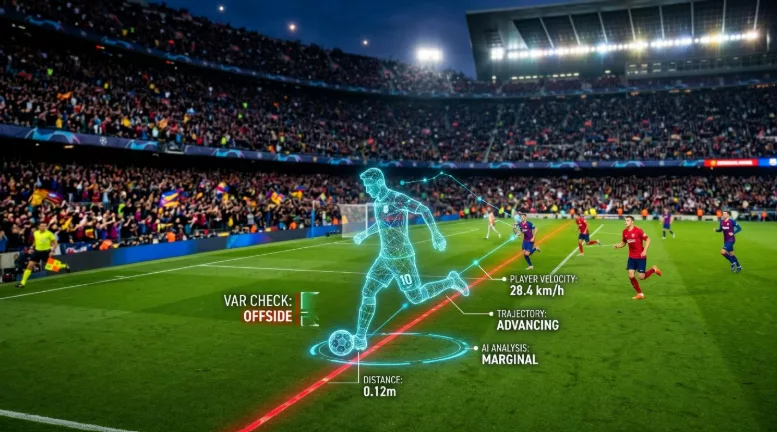
While robust back-end server infrastructure is the unsung hero of the tournament, the front-end fan experience is where Lenovo’s AI innovations become highly visible and truly transformative. For decades, contentious refereeing decisions have been a major source of friction and debate in global football. Through advanced Generative AI and real-time player data ingestion, Lenovo is introducing AI-enabled 3D player avatars to provide immediate, transparent visualizations of highly complex calls.
These 3D avatars are far more than flashy broadcast graphics; they are highly accurate, data-driven spatial reconstructions of the pitch at the exact microsecond of a critical event. They serve a vital dual purpose: providing an objective, secondary value input to support FIFA’s Match Officials in their high-pressure decision-making, and giving fans clear, indisputable visual evidence of why a specific call was made. This profound level of transparency helps demystify the rules of the game and substantially enhances the overall viewing experience by removing ambiguity.
Furthermore, Lenovo is leveraging its AI competence to dramatically improve the physical in-venue experience for the millions of attending fans. AI-driven navigation systems are being actively deployed across stadiums to dynamically manage crowd flow, significantly reducing physical congestion and streamlining movement across massive, complex venues. For those watching the broadcast at home, Lenovo has introduced AI-driven stabilized “Referee Views.” This technology utilizes advanced algorithmic image processing to deliver first-person referee perspectives with up to 50% less motion distortion. Combined with highly immersive digital and holographic experiences set up in official fan zones, Lenovo is radically redefining what it means to attend and interact with a live sporting event in the 21st century.
Leveling the Playing Field Through the Lenovo AI Factory
Perhaps the most culturally significant technological implementation at the 2026 World Cup is Lenovo’s unyielding commitment to democratizing elite football analytics. Historically, wealthier national federations have held a distinct competitive advantage due to their ability to afford massive teams of data analysts, bespoke software, and expensive processing hardware. Lenovo is actively aiming to dismantle that disparity and level the playing field through its inclusive “Smarter AI for All” vision.
For this tournament, Lenovo is deploying the groundbreaking FIFA AI Pro platform to all 48 competing teams. This next-generation AI-powered knowledge assistant delivers deep, actionable tactical insights directly to coaches, players, and video analysts. The robust backbone of this platform is built entirely using the Lenovo AI Factory—an integrated, enterprise-grade system where sophisticated machine learning models are developed, trained, continuously refined, and deployed to generate insights from incredibly complex sports datasets.
By providing every single national team—regardless of their internal federation budget—with identical access to elite-level data processing, pattern recognition, and predictive analytics, Lenovo is ensuring that the tournament is decided by athletic prowess and tactical brilliance on the pitch, rather than financial superiority in the back office. This powerful initiative beautifully illustrates how enterprise-level AI can be utilized ethically to promote fairness, equity, and elevated competition on the global stage.
Bringing the Game Home with Special Edition Collections
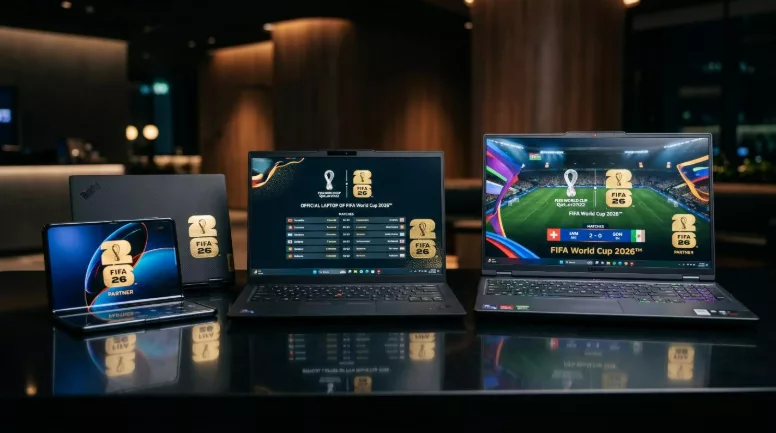
The technological marvels of the World Cup aren’t strictly confined to secure server rooms and massive stadiums. Recognizing the immense, deeply rooted passion of global football fans, Lenovo has cleverly bridged its enterprise success with its robust consumer electronics division by releasing a stunning collection of FIFA Special Edition devices.
This limited-edition lineup spans across Lenovo’s commercial, consumer, and high-performance gaming portfolios, featuring exclusive FIFA World Cup 2026™ branding and bespoke packaging. Fans are now able to carry a piece of the world’s largest sporting event in their pockets with the motorola razr FIFA World Cup 26th Edition, or elevate their daily professional productivity with the ThinkPad X9-14 Gen 1 and the ThinkPad X1 Carbon Gen 13 and 14. For content creators and gamers who require massive local compute power, the Yoga Slim 7i ultra Aura Edition and the formidable Lenovo Legion Pro 7i provide top-tier performance infused with the spirit of the game.
This strategic product rollout is a masterstroke in brand synergy. It allows everyday consumers to physically interact with the exact same brand of technology that is actively powering the global broadcast they are enjoying. It also serves to highlight the massive scale of Lenovo’s broader corporate investment in the sports industry, directly underscoring the successful launch of their dedicated sports vertical earlier this year. By cohesively integrating AI infrastructure, edge computing, smart devices, and managed services into a unified end-to-end operational model, Lenovo is proving that their technological ecosystem is entirely unmatched in both its breadth and raw capability.
Wrapping Up
The 2026 FIFA World Cup™ is undeniably set to be a watershed moment—not just for international football, but for the tangible deployment of enterprise artificial intelligence and edge computing at a massive, unforgiving global scale. Lenovo’s critical role as the Official Technology Partner is a resounding testament to the company’s unparalleled ability to engineer, deploy, and maintain end-to-end solutions under the most extreme, mission-critical conditions imaginable.
From the flawless, ultra-low-latency IPTV video distribution powered by resilient ThinkSystem hardware at the Dallas IBC, to the AI Nerve Center in Miami providing real-time operational oversight, Lenovo has successfully moved the sports broadcast industry away from historically fragmented systems toward a cohesive, real-time control methodology. By radically enhancing fan experiences with GenAI 3D avatars, streamlining stadium safety protocols, and leveling the competitive playing field for all 48 teams via their AI Factory, Lenovo is truly living up to its core ethos of “Smarter Technology for All.” As billions watch the drama unfold on the pitch this summer, it will be abundantly clear that the real game-changer is the invisible, flawless technological backbone working silently behind the scenes.