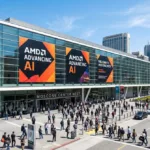

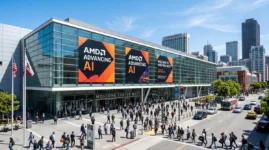
For decades, if you wanted to understand the absolute heartbeat of the technology sector and the definitive direction of enterprise computing, you booked a flight to San Francisco and walked into the Moscone Center. Specifically, you attended the Intel Developer Forum (IDF). In its prime, IDF was the ultimate flex of corporate muscle. It was a sprawling, multi-day showcase where Intel essentially dictated the future of silicon, client computing, and datacenter architecture to the rest of the world. It was the undisputed center of the universe for hardware developers, IT executives, and industry analysts. Today, that physical and psychological real estate has been comprehensively conquered by Advanced Micro Devices, and the implications for the broader market are staggering.
Attending AMD’s Advancing AI 2026 event, it was impossible to ignore the heavy symbolism of the venue. Staged prominently in Moscone Center West, the very building that once hosted Intel’s most triumphant industry moments, AMD did far more than just rent a convenient convention hall. They served a very public notice that they are displacing Intel, not just in the server market share reports, but deeply within the minds, strategic planning, and capital budgets of global enterprise buyers.
The transition is profound and multi-layered. When an enterprise buyer or infrastructure architect walks into Moscone West today, they are no longer looking for incremental, single-digit performance updates to legacy architectures. They are looking for transformative enterprise solutions and massive parallel processing scale capable of handling trillion-parameter models. By aggressively occupying this historical venue, AMD has effectively rewritten the entire enterprise narrative. The psychological impact on IT decision-makers cannot be overstated; when the physical venue that an entire generation of engineers associates with industry dominance changes its corporate colors to your primary competitor, the subconscious message is that the torch has officially been passed. AMD has successfully transformed what was once a relatively modest, tightly controlled press briefing into a massive, multi-day ecosystem event. With hundreds of developer sessions, packed expo floors, and keynote presentations that rival NVIDIA’s GTC in scale and importance, AMD is signaling a definitive and permanent shift in industry leadership.
Leadership and the Andy Grove Paradigm
The starkest and most consequential contrast between AMD and Intel right now isn’t merely found in benchmark scores, transistor counts, or node process advantages; it is fundamentally found in corporate culture and leadership strategy. The artificial intelligence opportunity is undeniably massive, representing the most significant platform and compute shift since the commercialization of the internet itself. However, the rate of technology advancement in this space is absolutely unprecedented. The window to establish dominance is narrow, and success requires relentless innovation, aggressive talent acquisition, and an internal environment that actively fosters bold risk-taking.
Currently, Intel, operating under the direction of CEO Lip-Bu Tan, is undergoing significant structural changes and executing massive, painful layoffs in a desperate attempt to right-size the business and appease restless shareholders. While aggressively cutting headcount does, over the short term, temporarily improve the financials on a quarterly earnings report, it is a fundamentally flawed strategy when facing a generational technology inflection point. In fact, Intel’s current trajectory seems to explicitly ignore the very survival lessons taught by its most legendary leader, the late Andy Grove. Grove famously understood and preached that you simply cannot cut your way out of a competitive hole. When the market is accelerating away from you, pulling back on resources hollows out a company’s core engineering capabilities, making the execution of future roadmaps even more difficult, if not impossible.
The cultural implications of these wildly divergent management strategies are massive and self-perpetuating. AMD is actively hiring, acquiring startups, and advancing their internal capabilities. It is inherently more fun, engaging, and highly productive to work for a company that is expanding its footprint. In a growing organization like AMD, opportunities for career advancement naturally increase, cross-departmental collaboration flows easily, and engineers are actively encouraged to push boundaries because the company is playing to win.
Conversely, a downsizing company creates an incredibly toxic, paralyzed, and stressful environment. When a company is continuously announcing workforce reductions, the internal dynamic fundamentally breaks down. Employees immediately stop positioning for long-term advancement and start worrying exclusively about simply surviving the next quarter. This pervasive termination fear reduces risk-taking and innovation to near zero. The employee concern violently flips from standing out positively to being absolutely terrified to stand out at all, knowing full well that any project failure—even a noble one—could place a fatal target on their back. By maintaining a steadfast focus on growth and capability expansion, Dr. Lisa Su has ensured that AMD’s engineering teams remain aggressively focused on defeating NVIDIA and Intel in the marketplace, rather than worrying about paying their mortgages.
The Synergy of CPU, NPU, and GPU
While much of the financial market’s attention over the last three years has been hyper-focused exclusively on standalone AI accelerators, the operational reality of modern enterprise computing is far more complex. AI factories, sovereign clouds, and next-generation corporate datacenters require a holistic, deeply integrated approach to silicon. This is exactly where AMD possesses a historic, structural, and currently insurmountable advantage: they have a far better, more mature, and seamlessly integrated blend of CPU, NPU, and GPU intellectual property than either NVIDIA or Intel.
NVIDIA undeniably leads the discrete GPU market with an iron grip, but their general-purpose CPU capabilities remain relatively nascent. They rely heavily on Arm-based Grace processors that, while efficient, do not always offer the native x86 compatibility and broad software ecosystem support that many legacy enterprise environments still strictly demand. On the other side of the spectrum, Intel possesses the x86 CPU legacy but has consistently struggled over multiple generations to deliver competitive, high-margin discrete AI accelerators at a scale that challenges the market leaders. AMD sits perfectly positioned in the middle, actively leveraging their dominant EPYC CPUs, their highly capable Instinct GPUs, and their deeply integrated Neural Processing Units (NPUs) to deliver cohesive, full-stack compute solutions.
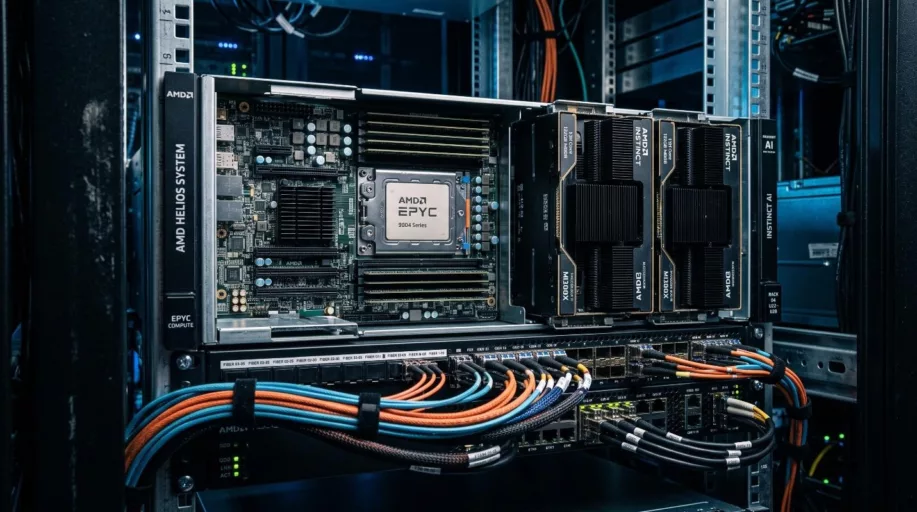
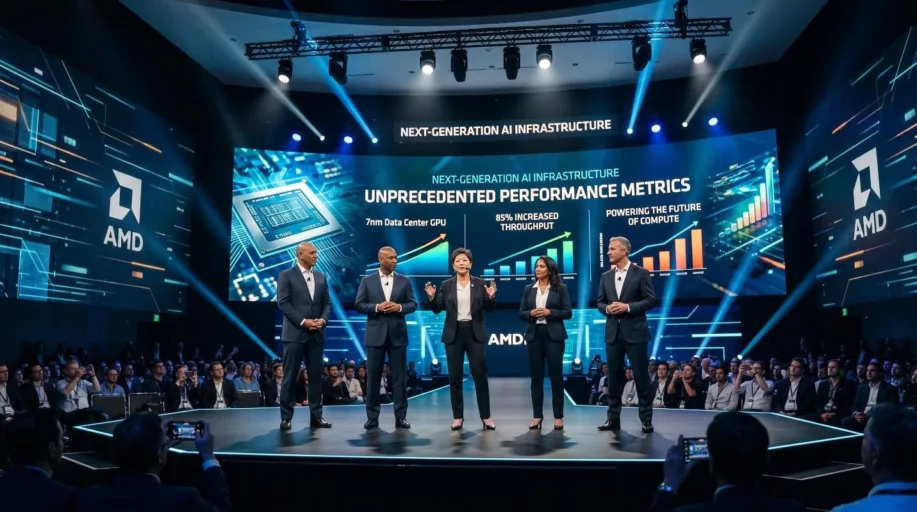
This unique silicon synergy was on spectacular full display with the introduction of the AMD Helios Rackscale Solution. By brilliantly combining next-generation EPYC “Venice” CPUs based on the Zen 6 architecture, cutting-edge MI455X accelerators, and highly efficient Pensando DPUs for advanced networking, AMD is delivering a fully integrated, open-standards AI powerhouse. And the market is responding with unprecedented enthusiasm. AMD is no longer an also-ran picking up the low-margin scraps that NVIDIA leaves behind. They are actively securing massive gigawatt-level infrastructure deals with the world’s largest hyperscalers, including Anthropic, Meta, and Microsoft Azure.
Furthermore, AMD is routinely showcasing performance and power advantages that are in the 20% range even against NVIDIA’s most formidable current hardware offerings. This power efficiency is not just a marketing bullet point; it is absolutely critical for modern deployments. As AI datacenters scale to unprecedented sizes, sheer power consumption and thermal management have become the ultimate operational bottlenecks. AMD’s unique ability to optimize the entire data pathway—from the EPYC CPU handling the initial massive data preparation and vectoring, to the NPU managing localized edge inference, to the Instinct GPU churning through massive training parameters—provides a compelling and tangible total cost of ownership advantage. Historically, AMD was widely known as a friendly, collaborative partner, willing to work within open ecosystems. More recently, however, they have leveraged that collaborative nature into a highly strategic and lethal weapon, building an open software ecosystem with ROCm that directly and aggressively challenges proprietary walled gardens, successfully pivoting the company to firmly lead the AI future.
Wrapping Up
The technology industry is notoriously unforgiving, and dramatic shifts in market dominance often happen slowly, beneath the surface, before they suddenly happen all at once. The Advancing AI 2026 event at Moscone Center West feels exactly like that critical, irreversible tipping point. AMD has successfully executed a masterclass in strategic corporate growth, aggressively leveraging their comprehensive silicon portfolio to meet the enterprise market exactly where it is heading. By consciously choosing to invest heavily in top-tier talent and advanced engineering capabilities while their oldest and fiercest rival, under Lip-Bu Tan, resorts to defensive, morale-crushing layoffs, AMD has captured both the technological high ground and the industry’s collective imagination.
The ghost of IDF may still silently linger in the cavernous halls of Moscone West, serving as a stark reminder of how quickly empires can fall in the semiconductor market. But make no mistake: the future being built in those halls today belongs entirely to AMD. They have conclusively proven that they possess the visionary leadership, the unparalleled hardware synergy, and the required corporate courage to not just participate in the ongoing AI revolution, but to aggressively dictate its terms.