


For years, the cybersecurity industry has operated under a massive delusion. We’ve been led to believe that if we just buy one more “next-gen” firewall or implement a slightly more intrusive endpoint detection tool, our data will finally be safe. Meanwhile, the bad actors have stopped banging their heads against the digital fortress walls. Instead, they’re simply walking through the front door because an executive—or the executive’s assistant—willingly handed them the keys.
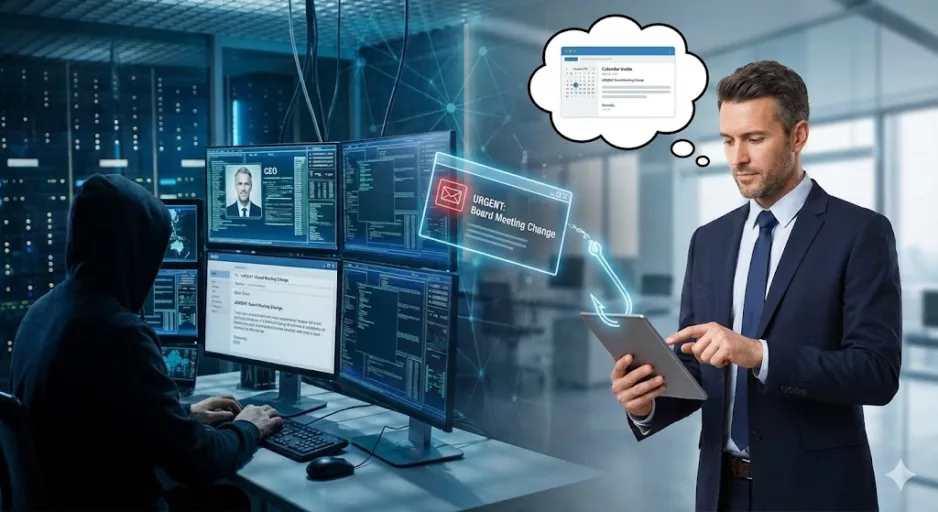
Phishing has evolved from the laughable “Nigerian Prince” emails of the early 2000s into a sophisticated, multi-vector psychological operation. Today, we are dealing with “Whaling,” where high-value targets like CEOs and CFOs are hunted with terrifying precision. To combat this, we need to stop treating security training as a checkbox for HR and start treating it as a core survival skill. This is why Wizer is currently the most interesting company in the space; they’ve realized that to secure a network, you have to re-engineer the human element.
The Human Lifecycle of Vulnerability
The “human exploit” doesn’t start in the office. It starts in the second grade. Gabriel Friedlander, the founder and CEO of Wizer, realized this when he noticed his own children were issued school passwords that were shared, insecure, and remained unchanged for years. If we train children to have zero digital hygiene, we can’t be surprised when they grow up to be employees who click on every “Urgent Invoice” attachment they see.
This problem spans the entire human lifecycle. Children are the entry point into home networks; retirees are the targets for life-savings drainage; and every employee in between is a potential bridge into a corporate database. Wizer’s genius was in creating a platform that recognizes this generational gap in security literacy. By offering playlists for parents and short, punchy videos that feel more like a TikTok feed than a corporate seminar, they are building a culture of awareness that follows the user from the classroom to the boardroom.
Why the C-Suite is the New Ground Zero
If you are a hacker, why spend months trying to find a zero-day exploit in a Linux kernel when you can spend ten minutes on LinkedIn and find out exactly who the CFO’s executive assistant is? Modern phishing—specifically Spear Phishing and Whaling—is about context. Attackers now use voice sampling, often taken from corporate voicemails or public speeches, to create “vishing” (voice phishing) attacks that sound exactly like a company’s IT director or CEO.
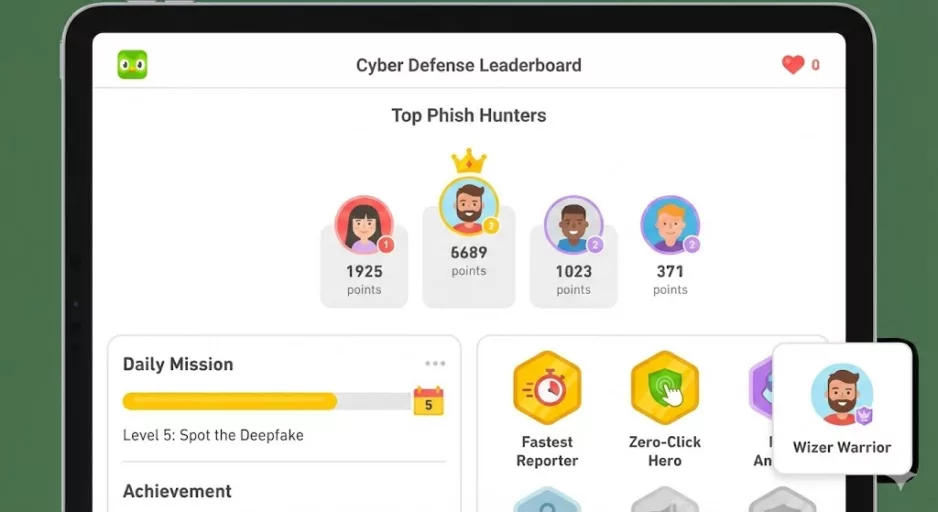
This is exactly why the financial industry has become the primary driver of Wizer’s rapid growth. In banking and fintech, the “Human Firewall” is the only thing standing between a legitimate wire transfer and a catastrophic loss. These firms have realized that their executives are the most targeted and, ironically, often the least trained. Executives often feel they are “too busy” for security training, but Wizer’s “Duolingo-style” approach—short, one-to-two-minute videos—strips away that excuse.
Gamification: Because Boredom is a Security Risk
The traditional approach to security training is to lock employees in a room (or a Zoom call) once a year and subject them to 45 minutes of mind-numbing legal jargon. This doesn’t work. In fact, it’s counterproductive because it teaches employees to associate “security” with “annoyance.”
Wizer flips this script by using simulations and games. Instead of lecturing, they use opt-in simulations where employees are challenged to identify a phishing attempt in real-time. Those who spot it quickly are recognized and rewarded. This creates a competitive environment where being “secure” becomes a point of pride. For a tech publication audience, this is the “killer app” of security: turning a defensive posture into an offensive game. When employees are actively looking for the “hook,” the hackers lose their greatest advantage: the element of surprise.
The Need for the High-EQ Security Awareness Manager
One of the most significant hurdles in rolling out effective training is the “IT-to-Human” translation layer. IT professionals are great at configurations, but they are often—bluntly—terrible at empathy. This is why the role of the Security Awareness Manager (SAM) is becoming critical.
A SAM needs to be more of a marketer and a psychologist than a coder. They need very strong people skills to facilitate the rollout of these programs without making the staff feel like they are being policed. They are there to build a culture of “shared responsibility.” For smaller firms that don’t have the headcount for a dedicated SAM, Wizer has intelligently filled the gap by offering SAM-as-a-Service, providing a human touch to an automated world.
The AI Revolution in Training Content
The speed of attacks is increasing, and training content needs to keep up. Wizer recently introduced a feature that allows companies to upload their own internal documents—like a new AI usage policy or an HR update—and the platform will automatically generate a training video based on that document.
This is a game-changer. If a company experiences a “near miss” attack on a Tuesday, the Security Awareness Manager can write a paragraph describing the event, upload it, and by Wednesday morning, every employee has a custom video in their inbox explaining how to avoid that specific threat. This level of agility is exactly what is needed to counter the rise of AI-driven social engineering. It’s also why infrastructure giants like Acronis have partnered with Wizer; they recognize that the best backup in the world is useless if the user is trained to give away the encryption keys.
Wrapping Up
The “human exploit” is the most scalable, cost-effective, and dangerous weapon in the modern hacker’s arsenal. From the grammar school student to the Fortune 500 CEO, we are all being hunted. Wizer has effectively disrupted the stale security training market by treating users like people rather than “vulnerabilities.” By utilizing short-form video, gamified simulations, and AI-driven content creation, they are providing the tools necessary to build a resilient “human firewall.” But tools are only half the battle; the other half is the Security Awareness Manager, the high-EQ bridge that turns technology into culture. If you aren’t training your executives to spot the hook, you’re just waiting to be gutted.