


Teaser: The age of agentic AI has officially arrived. At MWC 2026, the smartphone began its transformation into a proactive partner, promising a future where apps die and digital assistants finally work.
If you’ve been following my columns, you know I’ve been predicting the “death of the app” for years. We are finally seeing the foundation of that transition. At Mobile World Congress (MWC) 2026 in Barcelona, the narrative shifted from “generative AI” (which just talks) to “agentic AI” (which actually does things). We are moving away from smartphones that are merely pockets full of icons and toward devices that act as digital proxies.
But as with any gold rush, there is a lot of fool’s gold mixed in with the nuggets. Here is my breakdown of the top AI digital assistants and agentic platforms from MWC 2026, ranked by how much they will improve your life—or your bottom line.
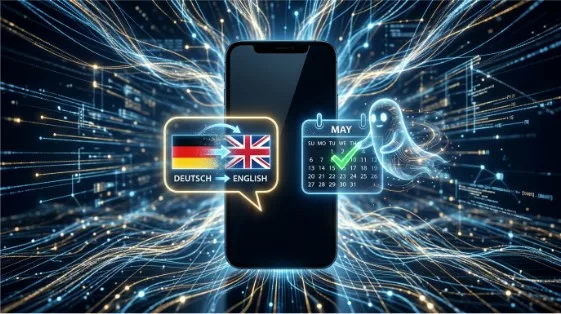
1. Magenta AI Call Assistant (Deutsche Telekom)
This was, without a doubt, the most significant announcement of the show. Built in partnership with [suspicious link removed], this isn’t an app; it’s a network-level service.
The Announcement: Deutsche Telekom’s Magenta AI Call Assistant marks a world premiere in network-embedded AI. Activated by simply saying “Hey Magenta” mid-call, the assistant joins the conversation in real-time to provide simultaneous translation and contextual assistance without requiring any app downloads or specific hardware.
The initial feature set is remarkably practical, focusing on live translation across 50 languages and generating post-call summaries to track follow-up tasks. Looking forward, the platform is designed to handle autonomous “actions,” such as making restaurant or doctor appointments and filling out digital forms during the conversation. By embedding the intelligence into the 3GPP-standardized network layer, Telekom has effectively made AI accessible to any phone, from high-end flagships to basic “dumb” phones.
- Who Needs It: International business travelers and the tech-averse who want AI benefits without the complexity.
- Estimated Cost: Likely bundled into premium Magenta plans or offered as a $5–$10/month add-on.
- Is It Worth It? Yes. It removes the friction of “finding an app” to solve a problem.
- The Future Replacement: Autonomous “Personal AI Agents” that conduct entire calls for you in the background.
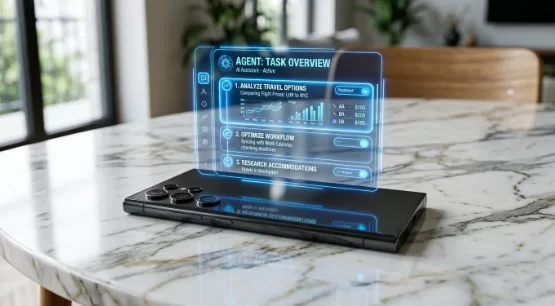
2. Galaxy S26 Agentic AI (Samsung)
Samsung is trying to own the “Agentic” hardware space by embedding it into the core of their silicon.
The Announcement: Samsung’s Galaxy S26 series launch focused on “Agentic AI” that understands intent rather than just responding to commands. Powered by a customized Snapdragon 8 Elite Gen 5, the phone features “Now Nudge,” which surfaces contextual suggestions like automatically finding photos a friend just asked for in a text.
The device also introduces a revolutionary “Privacy Display” that controls viewing angles to prevent prying eyes in public spaces—a hardware fix for a social AI problem. The “agentic” experience extends to the camera with “Photo Assist,” allowing users to describe complex edits in natural language. For instance, you can ask the AI to “turn this daytime photo into a night scene,” and the system regenerates the image with realistic lighting and shadows.
- Who Needs It: Power users who want a high-performance assistant that anticipates their daily routine.
- Estimated Cost: Included with the hardware (starting at $799–$1,299).
- Is It Worth It? If you are already in the Samsung ecosystem, yes. The hardware-software vertical integration is unmatched.
- The Future Replacement: AI-driven wearable glasses that eliminate the need for a screen-based phone.

3. Ubiquitous AI Health Assistant (China Mobile & Huawei)
This won the GLOMO award for a reason: it solves a real-world problem for 1.4 billion people.
The Announcement: Jointly created by China Mobile and Huawei, the Ubiquitous AI Health Assistant leverages 5G New Calling technology to provide medical triage via a standard voice link. It uses a high-speed data channel alongside the voice call to deliver medical Q&A, symptom screening, and hospital recommendations without an app.
The system is backed by a massive ecosystem connecting over 5,000 hospitals and 1 million doctors. By using multimodal large models and medical knowledge graphs, the AI provides millisecond-level responses. This is a massive step toward “Health Equity,” particularly for rural populations where doctor-to-patient ratios are dangerously low.
- Who Needs It: People in rural areas and the elderly who need immediate medical guidance.
- Estimated Cost: Generally free or subsidized by the carrier as a public health service.
- Is It Worth It? Absolutely. It’s a literal lifesaver that triages medical needs before a hospital visit is even necessary.
- The Future Replacement: Bio-integrated sensors that monitor your health 24/7 and “call” the AI assistant for you.

4. MINDR (Deutsche Telekom & Google Cloud)
While other assistants help you, MINDR (Multi-Agentic Intelligent Network Diagnostics & Remediation) helps the network stay alive.
The Announcement: Developed in partnership with Google Cloud, MINDR is a collaborative multi-agent system built on Gemini models. It shifts network operations from reactive troubleshooting to predictive remediation by correlating signals across the Radio Access Network (RAN), transport, and core domains.
The system has already demonstrated its worth during high-traffic events like the German Carnival, where it predicted and managed surges for over 130 parades. Unlike previous iterations, MINDR can autonomously diagnose and resolve issues before they affect the end-user. It marks a significant step toward a fully self-healing, “L4 autonomous” network infrastructure.
- Who Needs It: Enterprise customers and mission-critical services that require 100% reliability.
- Estimated Cost: Indirect; you pay for the reliability of the carrier service.
- Is It Worth It? Yes. Reliability is the ultimate feature in a connected world.
- The Future Replacement: Fully “Self-Healing” 6G networks that require zero human oversight.
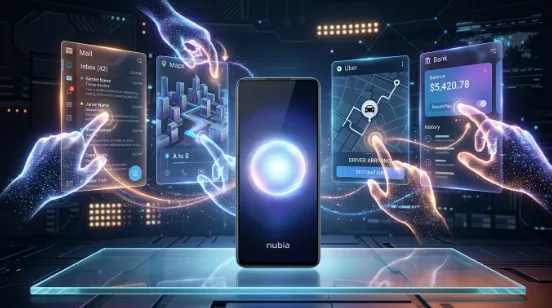
5. Doubao AI Assistant (ZTE/nubia M153)
This is the “Autopilot” for your smartphone.
The Announcement: ZTE’s nubia M153 with Doubao AI Assistant is an “AI-native” phone that integrates ByteDance’s AI at the OS level. It can execute cross-application tasks from a single natural language command, such as booking a restaurant while simultaneously comparing prices and mapping the route.
The hardware is robust—Snapdragon 8 Elite, 16GB RAM, and 512GB storage—specifically designed to handle the heavy local processing required for an “autopilot” experience. This device represents a shift where the user no longer “operates” the phone; they simply tell the phone what they want the outcome to be, and the AI handles the steps.
- Who Needs It: Efficiency junkies who want to minimize time spent navigating app menus.
- Estimated Cost: $495 (M153 hardware included).
- Is It Worth It? For the price, it’s the best value for “true” agentic behavior on the market.
The Future Replacement: A “Headless” OS where the UI is purely voice or gesture-based.

6. AI Meeting Agent (HONOR)
The specialized tool for the “Never-Ending Meeting” era.
The Announcement: The HONOR MagicPad4 tablet introduces an AI Meeting Agent within its 4.8mm ultra-thin frame. It features advanced speaker identification, real-time transcription, and automated task extraction into a specialized “AI Memo” environment.
Beyond the screen, HONOR also showcased “Robot Phone” and “Humanoid Robot” prototypes, signaling their intent to move AI into physical space. The MagicPad4 serves as the command center for this ecosystem, utilizing the Snapdragon 8 Gen 5 to maintain high-speed AI processing during multi-person video calls.
- Who Needs It: Corporate professionals and students who need automated documentation.
- Estimated Cost: Included with the $699 tablet.
- Is It Worth It? Yes, if it saves you two hours of note-taking a week, it pays for itself.
- The Future Replacement: AI avatars that attend the meeting on your behalf.
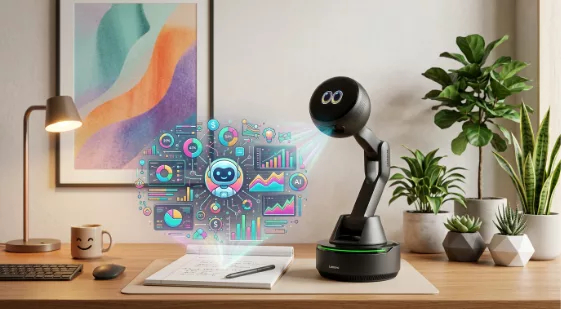
7. Lenovo AI Workmate (Concept)
The most interesting product of the show for me was a desktop robot with personality.
The Announcement: Lenovo’s AI Workmate is a desktop robotic arm with a circular display for a face. It uses voice and gesture recognition to “see” your physical desk, scan documents, and project them as PowerPoint presentations directly onto your workspace.
Accompanied by the “AI Work Companion” (a smart docking station disguised as a clock), these products represent Lenovo’s “Scenario-based AI” strategy. The Workmate is designed to be an ambient collaborator that handles the “grunt work” of document preparation and scheduling through a friendly, non-intrusive interface.
- Who Needs It: Creative professionals who want an “embodied” assistant that isn’t trapped in a screen.
- Estimated Cost: Likely $500–$700 if it hits production.
- Is It Worth It? As a glimpse into the future of “Embodied AI”? Absolutely.
- The Future Replacement: Fully mobile humanoid robots that can perform physical tasks.

8. IXIO AI Agent (LG Uplus)
The proactive guardian focused on security.
The Announcement: LG Uplus unveiled IXIO, a “human-centered” AI that prioritizes safety. Its flagship feature is real-time voice phishing detection, which analyzes incoming calls and blocks them if it detects a scammer’s speech patterns or malicious intent.
In partnership with KB Kookmin Bank, the system can even trigger a freeze on financial accounts if it detects a phishing attempt in progress. This proactive stance moves AI from a “helper” to a “protector,” a shift that is critical as social engineering scams become more sophisticated.
- Who Needs It: Every consumer, specifically the elderly and those at high risk for financial fraud.
- Estimated Cost: Subscription-based or bundled with premium carrier plans.
- Is It Worth It? Preventing one bank account drain makes this worth any price.
- The Future Replacement: Biometric voice-printing that makes it impossible for a scammer to initiate a call.

9. AI Pet iMoochi (ZTE)
The “Digital Companion” that targets emotional support.
The Announcement: ZTE’s iMoochi is an emotional support AI pet with a cloud-soft furry texture. It uses tactile sensors and haptic feedback to respond to pets and strokes, developing an evolving personality through “milky coos” and “iMoochi language.”
The device interacts via a companion app where users can read the pet’s “personal diary.” While it may look like a toy, the backend utilizes multimodal generative AI to simulate complex moods and reactions based on how the owner treats it, making it a sophisticated experiment in non-human companionship.
- Who Needs It: People living alone or those who want a “pet” without the organic upkeep.
- Estimated Cost: $300 (~$350).
- Is It Worth It? It’s a niche product, but highly advanced for its price point.
The Future Replacement: Hyper-realistic robotic animals with full LLM conversational abilities.
10. Tech Mahindra Agentic Payment Assistant
The “Back-Office” efficiency engine.
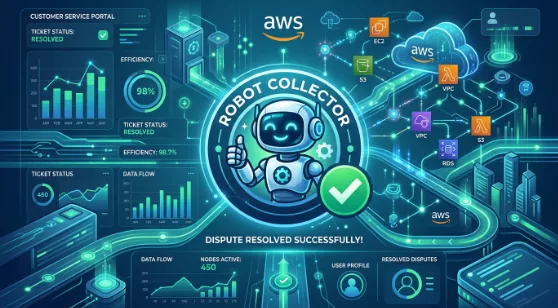
The Announcement: Tech Mahindra’s Agentic Payment Assistance is a B2B solution launched on the AWS Marketplace. It uses Amazon Bedrock and AWS Step Functions to automate complex payment collections for telecommunications operators.
The assistant can reason across multiple data signals—such as billing history and customer sentiment—to take autonomous actions, like offering customized payment plans before a customer defaults. It represents the “invisible” side of the agentic revolution, where businesses use AI to protect revenue while maintaining customer trust.
- Who Needs It: Telecom operators and large-scale enterprises looking to optimize collections.
- Estimated Cost: Enterprise pricing (B2B) to be determined.
- Is It Worth It? For enterprises, yes; it reduces the overhead of reactive human-led collections.
- The Future Replacement: Decentralized finance (DeFi) systems with automated smart contracts.
Wrapping Up
The takeaway from MWC 2026 is clear: The era of “AI as a feature” is over, and the era of “AI as the interface” has begun. We are seeing a divergence between Network AI (Magenta, MINDR), which focuses on removing friction, and Device AI (Samsung, nubia), which focuses on power and personalization.
However, the most intriguing middle ground—and perhaps the most disruptive—is what we saw with the Lenovo AI Workmate. It bridges the gap between digital intelligence and our physical reality. While Magenta works in the cloud and Samsung works in your pocket, the Workmate works on your desk, literalizing the idea of a “partner” by projecting data directly onto your physical world. It represents a shift from a “screen you look at” to a “space you work in,” which is where the real productivity gains lie.
If I had to bet my own money, the “Network-first” approach is the winner for the mass market because it treats AI as a utility—like electricity. But for the professional world, the embodied, ambient intelligence of Lenovo’s vision is where the future of work is headed. The “app” is officially on life support, and the “Agent” is the one holding the scalpel.