


The semiconductor industry has always been a theater of high-stakes speculation, but the current arms race in AI accelerators has reached a fever pitch. Recently, Dylan Patel of SemiAnalysis, a respected voice in the silicon strategy space, signaled a “red alert” regarding AMD’s upcoming Instinct MI455X. Patel’s thesis is simple: the complexity of the Blackwell-competitor is too great, the supply chain too constrained, and therefore, the MI455X will inevitably slip past its promised launch window.
However, if you look past the pessimistic modeling and toward the actual engineering leadership at AMD, a different story emerges. Anush Elangovan, Corporate Vice President of Software at AMD, has been vocal in defending the roadmap. While the “smart money” often bets on delays in the chip world, betting against AMD’s current execution streak is a historically losing proposition. The MI455X isn’t just a chip; it’s a statement of intent, and all signs point to it arriving exactly when AMD said it would: the second half of this year.
The Credibility Gap: Modeling vs. Manufacturing
Dylan Patel’s analysis often relies on “outside-in” modeling—predicting yields and packaging bottlenecks from the periphery. While intellectually rigorous, it often fails to account for the internal pivots and “war room” efficiencies that happen within a Tier-1 vendor like AMD. Patel suggests that the CoWoS (Chip on Wafer on Substrate) capacity is so choked by Nvidia that AMD will be forced to push back.
This ignores the reality of AMD’s long-standing partnership with TSMC. AMD isn’t a secondary customer; they are a strategic anchor for the foundry. Anush Elangovan’s confidence isn’t born of corporate PR, but of the visibility he has into the silicon’s progress through the software stack. You don’t begin aggressive software optimization for a chip that you know is six months behind schedule.
Elangovan has been clear: the silicon is hitting its milestones. In a series of public interactions, he has doubled down on the H2 timeline. It is right to distrust what comes out of Sales or Marketing but when a VP of Software tells you the platform is on track, it means the hardware is stable enough for the compilers and libraries to be finalized. That is the final stage before commercial release.
Addressing the Skeptics
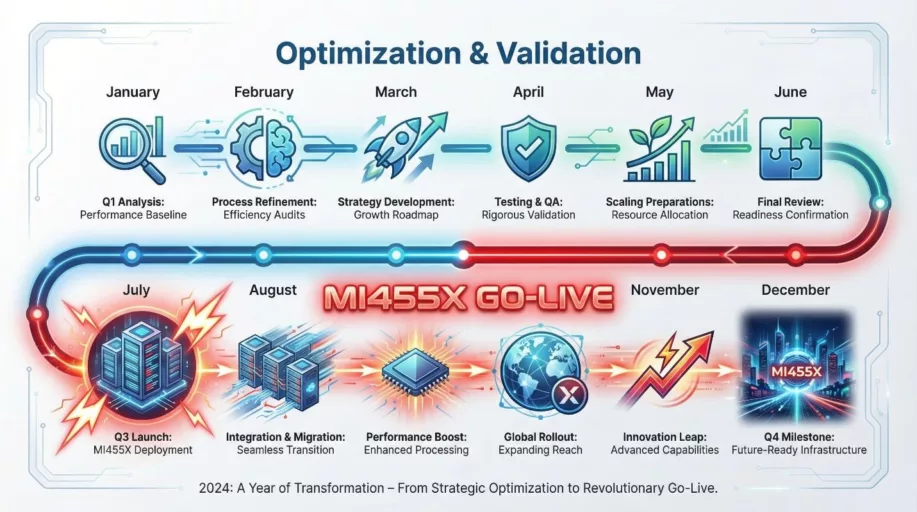
The core of the “delay” argument rests on the transition to the MI450/455 series being too rapid. Yet, AMD has proven with the MI300X that they can scale production faster than the market expects. Elangovan has addressed the skeptics head-on, suggesting that the integration of ROCm (Radeon Open Compute) with the new hardware is further along than external analysts realize.
As Elangovan noted in his recent communications, the momentum behind AMD’s open-source ecosystem is a primary driver for keeping the hardware on schedule. The hardware and software teams are no longer operating in silos; they are sprinting in parallel. He further emphasized that the feedback loops from Tier-1 CSPs (Cloud Service Providers) are already validating the MI455X architecture. These aren’t the words of a leader preparing the market for a “paper launch.” In addition, Lisa Su is famous for under-promising and over delivering, something that wasn’t common with AMD prior to her taking over as CEO so you can generally trust AMD’s projected milestones.
The Blackwell Pressure Cooker
Critics argue that Nvidia’s Blackwell launch puts so much pressure on the supply chain that AMD must blink. On the contrary, this competition is exactly why AMD cannot afford to be late, and why they have secured the necessary capacity well in advance.
Elangovan has pointed out that the ecosystem’s hunger for an alternative to the “green” monopoly has created a “pull-in” effect rather than a delay. When customers like Microsoft, Meta, and Oracle are breathing down your neck for silicon, you don’t find excuses to be late—you find ways to ship. AMD’s supply chain management under Lisa Su has been nothing short of surgical, and the MI455X is the beneficiary of that matured logistics machine.
The Software “Secret Weapon”
The reason most chips are late isn’t usually the silicon—it’s the software. If the software isn’t ready, the chip is a paperweight. Patel’s “late” thesis misses the massive strides AMD has made with ROCm 6.x. By simplifying the porting process from CUDA to ROCm, AMD has reduced the “validation soak time” required before a chip can be deployed.
Anush Elangovan’s leadership in this department is the reason the H2 window is solid. If the software stack is prepared, the product can quickly reach the market. The MI455X is designed to be a “drop-in” evolution, minimizing the architectural hurdles that typically cause delays in first-generation products.

Capstone: The Verdict on H2
To believe Dylan Patel is to believe that AMD has lost its grip on the very execution strategy that saved the company over the last decade. To believe Anush Elangovan is to recognize that AMD is now a “software-first” hardware company that understands the critical nature of the AI moment.
The MI455X isn’t just on time; it is the catalyst that will prove AMD can maintain a yearly cadence in the high-end AI accelerator market. While analysts move spreadsheets, engineers move mountains.
Wrapping Up
- Execution over Speculation: Despite Patel’s “late” forecast, AMD’s internal milestones for the MI455X remain green across the board.
- Software Readiness: Anush Elangovan’s confidence stems from the maturity of the ROCm ecosystem, which is ready to support the new silicon immediately.
- Strategic Priority: With Tier-1 cloud providers demanding alternatives to Nvidia, AMD has prioritized the MI455X supply chain above all other product lines.
- The Bottom Line: Expect the MI455X to debut in the second half of this year, silencing the skeptics and cementing AMD as a permanent fixture in the ultra-high-end AI space.