
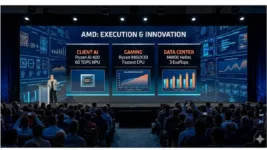
As the dust settles on the spectacle that is CES 2026 in Las Vegas, one thing is abundantly clear: Advanced Micro Devices (AMD) is an execution machine operating at peak efficiency. The opening keynote, delivered by CEO and Chair Dr. Lisa Su, was a relentless barrage of product announcements spanning client AI, gaming dominance, and data center supremacy.
Yet, watching the presentation, I was struck by a familiar duality that defines AMD in its current golden era. On one hand, the company is delivering silicon that genuinely pushes the boundaries of computing. On the other, their major events often lack the cohesive, narrative “pop” that defines competitors like NVIDIA (though this year NVIDIA wasn’t really on their game) or customers like Lenovo (who set the bar this year). This isn’t a product failing; it is a structural one. AMD continues to execute brilliantly on engineering, but at hyper-hyped events like CES, they are perceptibly hampered by the lack of a dedicated, top-tier Chief Marketing Officer (CMO).
The IBM Pedigree: Substance Over Sizzle
Before diving into the silicon, it is necessary to acknowledge the force behind it: Dr. Lisa Su. I have long admired Dr. Su, not just for turning AMD around, but for how she did it. She embodies the best traditions of her IBM background—a culture rooted in deep technical competence, rigorous roadmap execution, and an aversion to vaporware.
At CES 2026, this competence was on full display. Dr. Su doesn’t need gimmicks; she has specs. Her presentation style is disciplined, grounded in engineering reality, and focused on delivering measurable value to customers. In an industry often choking on hype, her steady hand is refreshing. She is the ultimate engineer’s CEO, prioritizing the “what” and the “how” over the theatrical “why.” This IBM-forged discipline is why AMD is trusted by everyone from hyperscalers to hardcore gamers.
Relentless Client and Gaming Execution
The press announcements from the keynote underscore this relentless execution. In the client space, AMD isn’t just participating in the AI PC revolution; they are attempting to define its performance tier.
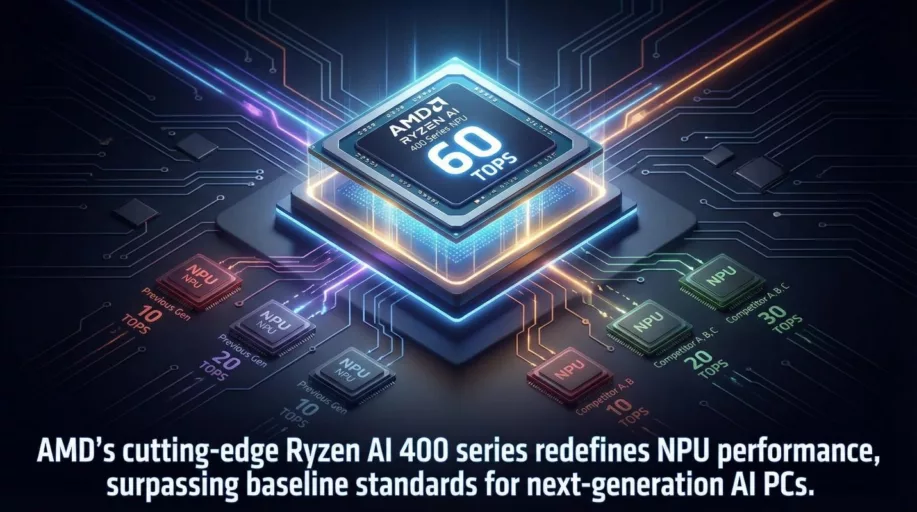
The new Ryzen™ AI 400 Series processors, built on the “Zen 5” architecture, are a prime example. By offering up to 60 TOPS of NPU compute, AMD isn’t just meeting the requirements for Microsoft Copilot+ PCs; they are exceeding them significantly. This is crucial for enabling next-generation, on-device AI experiences that don’t rely on the cloud.Furthermore, AMD reiterated its commitment to its core constituency: gamers. The announcement of the Ryzen™ 9850X3D utilizing 2nd Gen AMD 3D V-Cache™ technology to claim the title of “world’s fastest gaming processor” is a direct strike at Intel’s remaining strongholds.
Perhaps most interesting for the ecosystem is the push on software. The 10x year-over-year increase in ROCm downloads indicates that AMD is finally chipping away at NVIDIA’s CUDA moat, providing developers with viable alternatives for local AI workloads on products like the new Ryzen AI Halo mini-PC.
The Data Center Moonshot
If the client side was about solidifying leadership, the data center announcements were about pure ambition. AMD’s execution here is terrifying to its competitors.
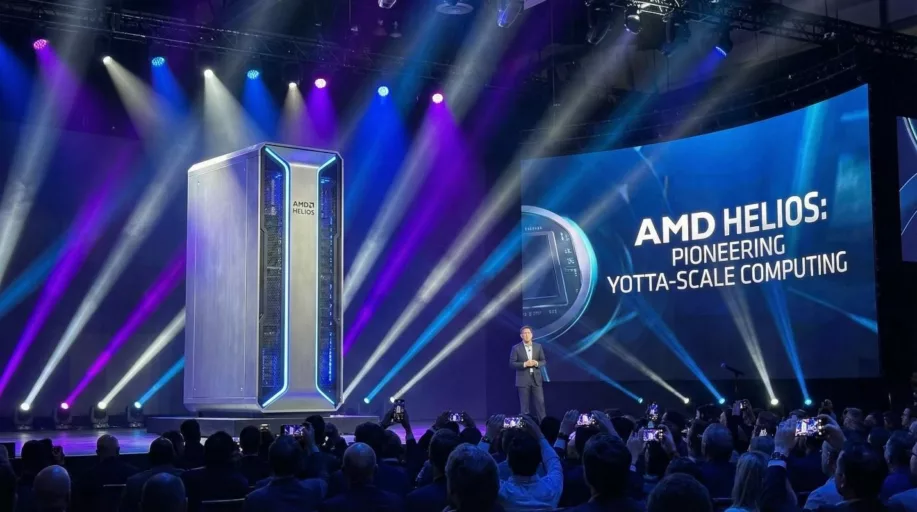
The unveiling of the full MI400 Series lineup, led by the “Helios” blueprint for yotta-scale compute, demonstrates that AMD is thinking way beyond the current AI boom. Delivering up to 3 AI exaflops in a single rack is an astounding engineering claim aimed squarely at training trillion-parameter models.
Even more audacious was the tease of the MI500 Series for 2027. Projecting a 1,000x increase in AI performance compared to the MI300X using CDNA™ 6 architecture and 2nm process technology is the kind of long-range roadmap confidence that only a company sure of its execution engine can provide.
The Missing Ingredient: The CMO Gap
Given this incredible array of technology, why did the keynote feel somewhat utilitarian? This brings us back to the missing piece of the puzzle.
When a CEO as capable as Lisa Su has to also serve as the de facto Chief Marketing Officer during the year’s biggest tech stage, something gets lost. A great CMO doesn’t just sell products; they weave a unified mythology around the brand. They connect the dots between a gaming chip, a data center rack, and an embedded automotive processor into a singular, irresistible narrative about the future.
While Dr. Su eloquently described the parts, the presentation lacked the cohesive emotional resonance that a dedicated marketing leader brings. The announcements were a list of wins, rather than a story of conquest. Without a CMO to manage the “sizzle,” AMD relies entirely on the “steak.” Fortunately for them, the steak is world-class. But at CES, one can’t help but wonder how much bigger the impact would be if the marketing machinery matched the excellence of the engineering machinery.
Wrapping Up
AMD’s showing at CES 2026 was a testament to Dr. Lisa Su’s disciplined, competence-first leadership, a style honed in the best traditions of IBM. The company is executing flawlessly across client AI, high-end gaming, and data center infrastructure, delivering products that lead their respective categories. However, the event also highlighted a persistent weakness: the absence of a high-profile CMO to elevate these technical achievements into an industry-defining narrative. AMD has the best engines in the world; they just need a better storyteller in the passenger seat.