

As we move through 2026, the narrative surrounding Artificial Intelligence has shifted from the breathless hype of “what if” to the cold, hard reality of execution. For the technology industry, 2026 is becoming a year of reckoning. We are seeing a massive bifurcation between the promise of “Agentic AI” and the fragmented, often frustrating experience of the “AI-PC.” While data centers continue to inhale silicon and power, the devices on our desks and in our pockets are struggling to define their new identity.
The AI-PC Identity Crisis: Fragmentation and Friction
The “AI-PC” was supposed to be the Great PC Renaissance. Instead, it has hit a significant wall characterized by a lack of local application support and a jarring lack of consistency between hardware OEMs. While Microsoft has pushed its Copilot+ standards, the actual user experience varies wildly depending on whether you are running an Intel, AMD, or Qualcomm-based system.
The most significant friction point remains the battle over the Neural Processing Unit (NPU). Microsoft’s vision for the AI-PC is centered on the NPU—a low-power engine designed for always-on background tasks like eye contact correction and local data indexing. However, NVIDIA, the undisputed king of AI hardware, has largely refused to play by Microsoft’s NPU rules. NVIDIA argues, quite effectively, that their RTX GPUs offer significantly more TOPS (Trillion Operations Per Second) than any integrated NPU, making the dedicated NPU redundant for high-end users.
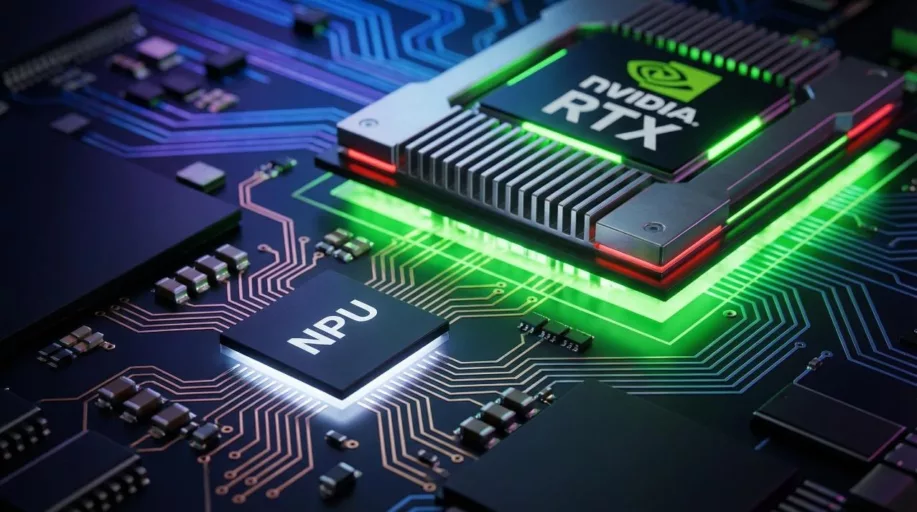
This creates a “split-brain” problem for developers. Do they code for the low-power NPU to ensure battery efficiency, or do they target the massive power of the NVIDIA GPU? Because there is no unified execution layer, we are entering 2026 with a dearth of “killer” local AI apps. Most users are still just using their “AI-PC” to access cloud-based tools, which defeats the purpose of the expensive hardware sitting under the hood.
Generative AI: The Survival of the Smartest
In the realm of Generative AI, the landscape in 2026 is dominated by a few “God-models.” GPT-5 and Claude 4 have moved beyond simple text generation into complex “chain-of-thought” reasoning. These platforms are no longer just predicting the next word; they are simulating outcomes before they present them.
Google’s Gemini 3 is currently performing exceptionally well due to its deep integration into the Android ecosystem and Google Workspace, making it the most “convenient” AI for the average user. However, the shift in 2026 is moving away from these monolithic chat interfaces toward specialized, multimodal models. We are seeing a rise in “Sovereign AI,” where companies and even nations are training smaller, high-quality models on proprietary data rather than relying on the “strip-mined” public internet data that fueled the early versions of GPT.
The Rise of Agentic AI: From Tools to Teammates
If 2024 was the year of the Chatbot, 2026 is the year of the Agent. We are moving from “Prompt-based AI” to “Goal-based AI.” An agentic platform doesn’t wait for you to tell it what to do every step of the way; you give it a goal (e.g., “Organize a marketing campaign for the new Jaguar club newsletter”), and it coordinates with other agents to execute the task.
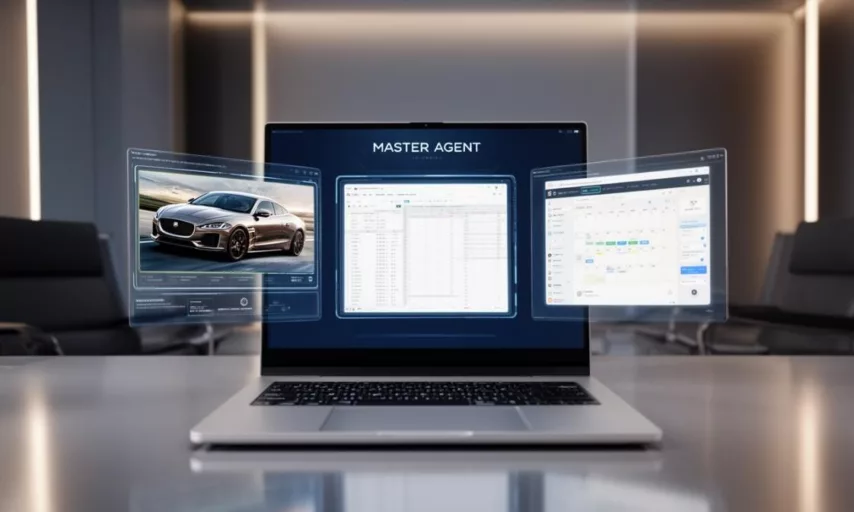
Microsoft’s AutoDev and Palantir’s AIP are currently the frontrunners in this space, providing robust frameworks for multi-agent orchestration. On the flip side, we are seeing “Agentic Bloat” in the consumer sector, where poorly designed agents from smaller startups are failing due to “jagged intelligence”—the tendency for an AI to solve a complex coding problem but fail at basic scheduling. In 2026, the best-performing agentic systems are those that treat AI as a “microservice,” where specialized agents handle discrete tasks under a central controller.
The AGI Mirage: Is 2026 the Turning Point?
The debate over Artificial General Intelligence (AGI) has reached a fever pitch. While Elon Musk and some tech optimists have predicted AGI could appear in 2026, the consensus among researchers is more tempered.
We are seeing “sparks” of AGI, particularly in the way models can now transfer knowledge between completely unrelated domains. However, the “scaling wall” is real. We are running out of high-quality human data to train on, and synthetic data is creating “model collapse” in some instances. While 2026 may be remembered as the year AI became “useful enough” to replace many white-collar functions, a true, self-aware, or fully autonomous AGI remains just out of reach for most.
The Memory Shortage: A Logistics War
The AI explosion has created a catastrophic shortage of High Bandwidth Memory (HBM) and DDR5. AI servers are consuming the world’s supply of DRAM, driving up costs for PCs and smartphones. This is where the “logistics advantage” becomes the primary competitive differentiator.
Lenovo is currently in the best position to weather this storm. Their massive, vertically integrated supply chain and deep relationships with memory suppliers in Asia have allowed them to stockpile components while others are forced to cut production or raise prices. In 2026, the “best” PC will often be the one that is actually available and affordable, giving Lenovo a significant edge in the enterprise market.
AI Security: The New Arms Race
As AI agents become more autonomous, the attack surface for corporations has exploded. “Prompt injection” has evolved into “Agent hijacking,” where a malicious actor can trick an AI agent into exfiltrating data or bypassing security protocols.

Companies like HP are positioning themselves as the “safe” harbor in this storm. HP’s Wolf Security has pivoted to address AI-specific threats, focusing on hardware-level isolation. By using “Privileged Access Workstations” and strong application isolation, they are aiming to contain AI-assisted attacks that traditional antivirus software simply cannot catch. In 2026, security is no longer about detecting the threat; it’s about isolating the AI so that even if it is compromised, it cannot touch the core enterprise data.
Hardware Roadmaps: Smartphones vs. PCs vs. The New Class
Smartphones continue to eclipse PCs in the AI race because they are “always-on” and “always-with-you.” The Pixel 10 and iPhone 17 (expected later this year) are becoming the primary interfaces for personal AI agents.
However, we are seeing the emergence of a new class of AI-centric hardware—wearables like refined AI glasses and “neck-worn” compute units—that threaten to make both the smartphone and the PC obsolete. These devices prioritize voice and visual “intent” over keyboards and touchscreens. If these devices gain enough traction in late 2026, the PC may be relegated to a specialized tool for “heavy lifting,” much like the mainframe became a back-end tool for the PC.
Transportation: The Level 4 Inflection Point
2026 is the year autonomous vehicles (AVs) move from “beta” to “baseline” in major urban centers. Companies like Waymo and Zoox are expanding rapidly, but the real story is the integration of AI into personal vehicles.
We are seeing Level 3 (L3) autonomy—where the car drives itself but the driver must be ready to take over—becoming a standard option in high-end models from BMW and Mercedes. Meanwhile, the partnership between Lucid and Nuro is pushing the boundaries of “personal robocars.” The AI in these vehicles is no longer just following rules; it is using “World Models” to predict the behavior of pedestrians and other drivers with uncanny accuracy.
Preparing for the AI-Driven 2026
For individuals and companies to survive this transition, the priorities must shift:
- Redesign Work, Don’t Just Automate: Follow the 80/20 rule. 80% of the value comes from redesigning workflows so agents can handle the routine, allowing humans to focus on strategy.
- Fix the Data Foundation: AI is only as good as the data it accesses. Companies must prioritize “data hygiene” to ensure their agents aren’t making decisions based on “garbage” data.
- Invest in “AI-Forward” Talent: The most valuable employees in 2026 are not those who can “prompt” an AI, but those who can orchestrate multiple AI systems.
Wrapping Up
The AI landscape of 2026 is one of incredible power but deep fragmentation. The AI-PC is struggling to find its footing due to hardware-software friction and a lack of local apps, while the cloud-based “Agentic AI” revolution is moving at light speed. Companies like Lenovo and HP are leveraging logistics and security to maintain their dominance, even as new classes of hardware threaten the traditional PC model. Whether or not we reach AGI this year is almost secondary to the fact that AI is now a permanent, autonomous “partner” in the global economy. The winners of 2026 won’t be those with the fastest chips, but those who can most effectively manage the “Supersonic Tsunami” of intelligent automation.