

I was saddened to hear that Louis Gerstner passed this week. When I look back at the landscape of technology history, few turnarounds are as dramatic or as misunderstood as IBM’s near-death experience in the early 1990s. I was working at IBM during those turbulent times, before moving into the analyst world, and I had a front-row seat to the arrival of Louis V. Gerstner Jr in 1993.
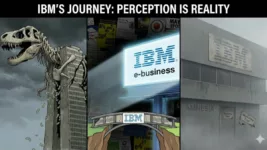
The IBM I knew then was paralyzing itself. It was a massive, bureaucratic entity bleeding cash, fragmented into warring fiefdoms, and widely regarded by the market as a dinosaur destined for the tar pits. The common narrative is that Gerstner came in and fundamentally changed the company’s operations. While true to an extent, that view misses the crucial element of his success: Gerstner, the outsider from RJR Nabisco and American Express, understood something the entrenched IBM technologists didn’t—that in business, perception is reality.

The Heavy Lifting vs. the Vital Fix
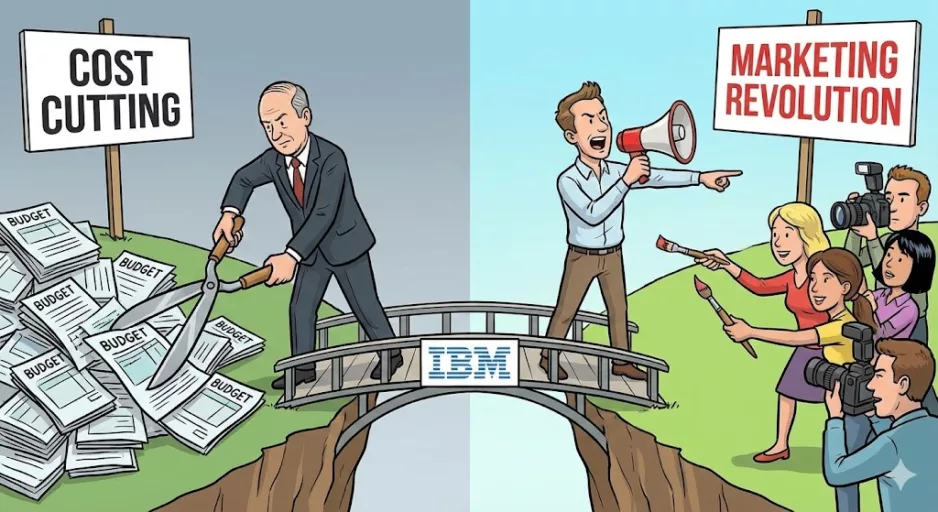
It is important to give credit where it is due. The operational restructuring of IBM—the brutal cost-cutting, the selling off of non-core assets and the financial stabilization—was largely the work of the board-selected Chief Financial Officer, Jerome “Jerry” York. York was the hatchet man IBM desperately needed to stop the financial hemorrhaging. He did the heavy lifting on the balance sheet.
However, as an analyst looking back, I can assure you that if York’s cuts were the only medicine administered, IBM would have simply become a smaller, more efficient corpse. The company’s brand was toxic. Enterprises were actively looking for alternatives because nobody wanted to bet their career on a company that the press and Wall Street had declared terminal. Gerstner recognized that you cannot cost-cut your way to growth if the market perceives you as irrelevant.
The Unprecedented Marketing Engine
This is where Gerstner’s genius truly lay, and it’s a lesson I fear the industry has largely forgotten. Upon arriving, he realized IBM’s marketing was a mess of disjointed messages from dozens of ad agencies, all confusing the customer.
Gerstner didn’t just tweak the marketing; he revolutionized it. He famously consolidated IBM’s entire global advertising account into a single agency, Ogilvy & Mather, a move of unprecedented scale. He understood that before IBM could sell its products, it had to sell its competence and its future.
He funded a marketing effort that remains largely unmatched in terms of staffing, budget and, crucially, executive air cover. He empowered marketing leadership to reshape how the company talked, looked and acted. We saw the launch of the “Solutions for a Small Planet” campaign and the brilliant embrace of the term “e-business,” which positioned IBM not as a legacy hardware vendor, but as the essential architect of the internet age. Gerstner knew that to change the reality of IBM’s business, he first had to change the market’s perception of it. And it worked.

IBM’s Amnesia and the Industry’s Blind Spot
Sadly, IBM appears to have suffered a severe case of institutional amnesia regarding what actually saved it. Following Gerstner’s departure in 2002, the company slowly reverted to viewing marketing largely as a discretionary cost center rather than a strategic lever.
Today, IBM suffers from chronic under-marketing. Despite pioneering work in AI with Watson long before ChatGPT, and significant strengths in hybrid cloud and quantum computing, IBM’s brand presence is muted. It allowed competitors to define the narratives around cloud and AI because it stopped funding the massive, perception-shifting campaigns that defined the Gerstner era.
This isn’t just an IBM problem; it is a recurring failure mode in the tech industry. Too many engineering-led companies believe that “good products sell themselves.” They don’t. In a noisy marketplace, you need air cover. Companies struggling with valuation or market relevance today often look toward operational fixes when their real problem is a failure to manage perception aggressively. A CEO cannot succeed if the market believes their ship is sinking, regardless of how hard the crew is bailing water.

Gerstner’s Critical Flaw: Succession
For all my admiration of Gerstner’s execution, his tenure wasn’t perfect. His most significant failure—and the one that ultimately undid much of his legacy—was his inability to adequately select and train a successor who understood the entire playbook.
Gerstner’s handpicked successor, Sam Palmisano, was a brilliant sales leader and operator, but he lacked Gerstner’s intuitive grasp of brand stewardship. Palmisano, and subsequent CEOs, slowly dismantled the centralized marketing apparatus and reduced the investment in brand perception, focusing instead on financial engineering like stock buybacks. They inherited a healthy patient and slowly stopped administering the vitamins that kept it vibrant.
Wrapping Up
Louis Gerstner’s time at IBM serves as the ultimate case study in corporate turnaround psychology. He proved that while financial discipline keeps you alive, it is the vigorous management of market perception that gives you a life worth living. He bought IBM decades of additional relevance by spending aggressively to convince the world that IBM mattered. It is a lesson that IBM has tragically forgotten, but one that every current tech CEO should study if they wish to maintain their brand value and ensure their own tenure is deemed a success.